
Home > Aesthetic dentistry
Updated: 20.07.2026 • Reading time: 7 minutes

Ceramic veneers are a modern method of aesthetic dental restoration with long-lasting results. According to the American Academy of Cosmetic Dentistry, ceramic restorations can maintain their appearance and function for 10–15 years or longer with proper care.
The procedure typically requires 2–3 visits: from consultation and treatment planning to final placement, usually within 1–2 weeks. The cost is determined individually and depends on the number of teeth, material, and case complexity.
Contents
- Overview
- Problems veneers can solve
- Advantages and disadvantages
- Types of ceramic veneers
- Recommended videos
- Treatment stages
- Longevity and care
- Contraindications and alternatives
- Cost of ceramic veneers
- Before/after photos and videos
- Doctors
- Reviews
- FAQ
What are ceramic veneers
Veneers are thin ceramic shells (0.3–0.5 mm) bonded to the front surface of teeth using dental cement. They correct shape, color, alignment, and other imperfections, creating a bright, natural-looking smile.
A tooth restored with a veneer looks natural and gains additional strength. Ceramic veneers are considered the optimal solution today – they can last up to 20 years, compared to composite veneers (3–5 years), and are less prone to chipping than lumineers.
What problems veneers solve
- Tooth discoloration and stains
- Chips and cracks
- Gaps between teeth
- Irregular shape or length
- Mild crowding or misalignment
Advantages and disadvantages
Natural aesthetics
Ceramic closely mimics natural enamel – translucency, depth, and shine.
Stain resistance
Does not absorb pigments from coffee, tea, wine, or tobacco.
Durability
With proper care, veneers last 10–15 years or longer.
Minimal tooth preparation
Only a thin layer of enamel is removed.
Limitations and risks
Not suitable for severe bite issues, extensive tooth damage, or uncontrolled bruxism. The procedure is irreversible. Excessive load may cause chipping or debonding.
Types of ceramic veneers
1.Pressed ceramic (E.max)
Lithium disilicate material combining strength and aesthetics.
2.Feldspathic ceramic
Highly aesthetic, handcrafted layered veneers.
3.Ultra-thin (no-prep / minimal prep)
Very thin veneers requiring little to no enamel removal, suitable only in selected cases.
Video on current issues on ceramic veneers


Procedure stages and duration
- Consultation and diagnostics
- Photo/video protocol, smile design planning
- Mock-up (trial of the future shape)
- Tooth preparation for veneers
- Impressions or scanning (digital scanning is used)
- Laboratory fabrication
- Final placement
Indirect ceramic veneers are considered micro-prosthetic restorations. They are fabricated based on dental impressions and require a two-step procedure.
First, the enamel is prepared and temporary veneers are placed. Once the final veneers are ready, the temporary ones are removed and replaced with permanent restorations.


Preparation
At the first visit, the doctor determines the possibility of installing veneers. Under the action of a local anesthetic, teeth are prepared for veneers. This is followed by the removal of dental impressions and the installation of temporary veneers.

Production of veneers
Ceramic veneers are made by a dental technician in the laboratory on previously taken dental impressions. The term of this stage is usually 7 days (up to 2 weeks, when a large number). Veneers are installed to restore the shape, aesthetics and eliminate gaps between the teeth, so it can be installed both 2 and 14 per a jaw.

Installation of veneers
Temporary veneers are removed, fitting of permanent ones is carried out. Next, the installation of permanent veneers on a special dental glue, which prevents caries in the covered teeth under the veneers.
Longevity and care
How long veneers last
Ceramic veneers last on average 10–15 years or longer depending on material quality, fabrication accuracy, and patient compliance.
What affects longevity
Key factors include bite, load distribution, habits (grinding, biting hard objects), oral hygiene, and regular check-ups.
Daily care
Brush twice daily, use floss or an irrigator. Soft brushes and non-abrasive toothpaste are recommended.
Check-ups
Preventive visits 1–2 times per year to monitor condition and perform professional cleaning.
Night guards for bruxism
A protective night guard reduces load and prevents chipping or debonding.
Contraindications and alternatives
When veneers are not suitable
Severe bite issues, extensive tooth damage, uncontrolled bruxism, and poor hygiene.
Veneers vs crowns
Veneers – minimal preparation; crowns – full coverage.
Veneers vs whitening
Whitening affects color only; veneers change both color and shape.
Other options
Composite veneers, orthodontics, or combined approaches.
Ceramic veneer pricing
What is included:
- consultation and treatment plan;
- OptraGate;
- tooth preparation;
- fabrication and placement of veneers.
Up-to-date pricing is available on a separate page.
As of March 15, 2026:
€210 per veneer;
from €260 for aesthetic work.
The treatment estimate remains fixed until completion.
What is charged separately
Caries treatment, root canals, and gum treatment if required.
All preparatory procedures can be performed in one visit under sedation.
Diagnostic procedures (X-ray, CT) and sedation are calculated separately and are not included in veneer pricing.
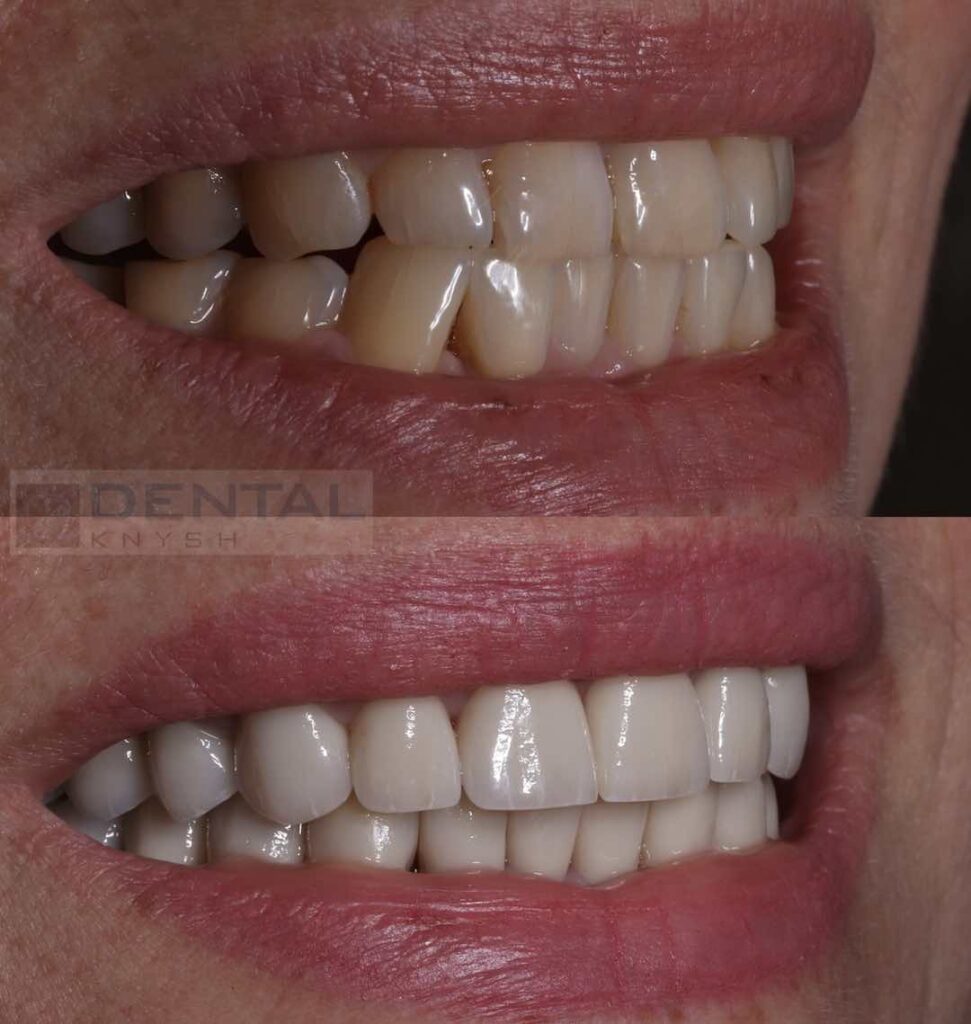
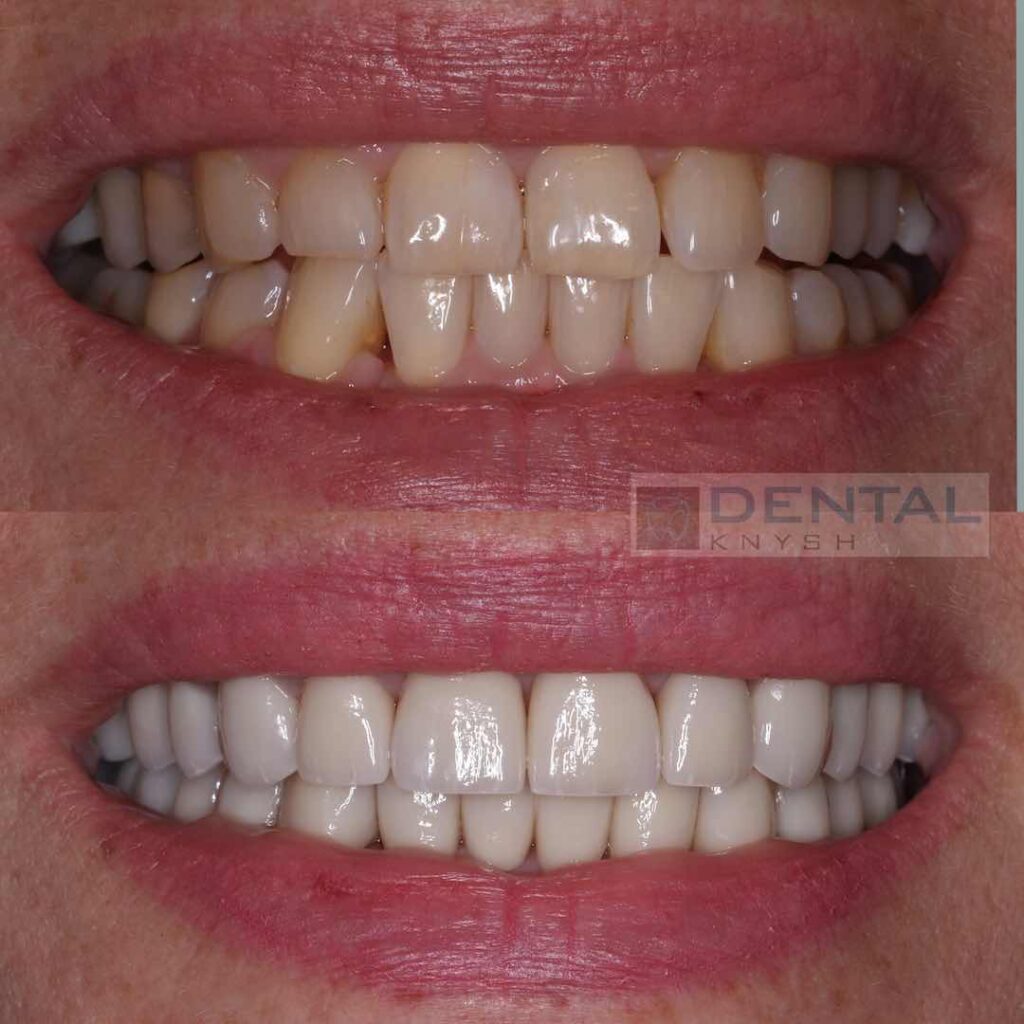
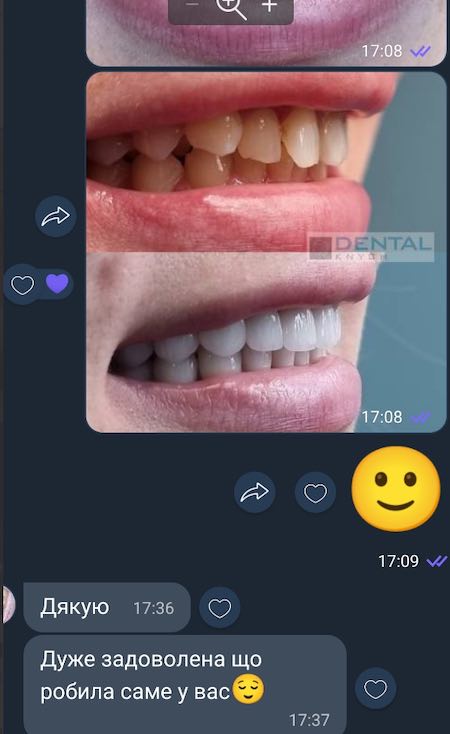
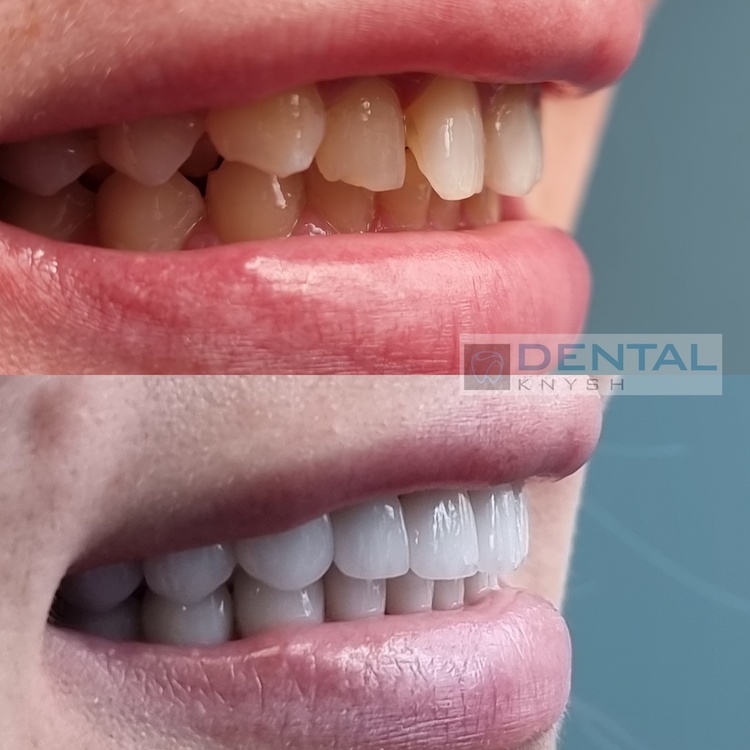
Photos of installed ceramic veneers
Photo report: result of installing ceramic veneers, 2025-08-25






You can see more photos of the installation of ceramic veneers by our specialists here
Reviews


You can see more reviews of our specialists’ work (photos, videos) on the DentalKnysh Reviews page
Veneers – aesthetic restoration of teeth in DentalKnysh dentistry


We speak English

Aesthetic

We have been treating since 1989
Our doctors who place ceramic veneers
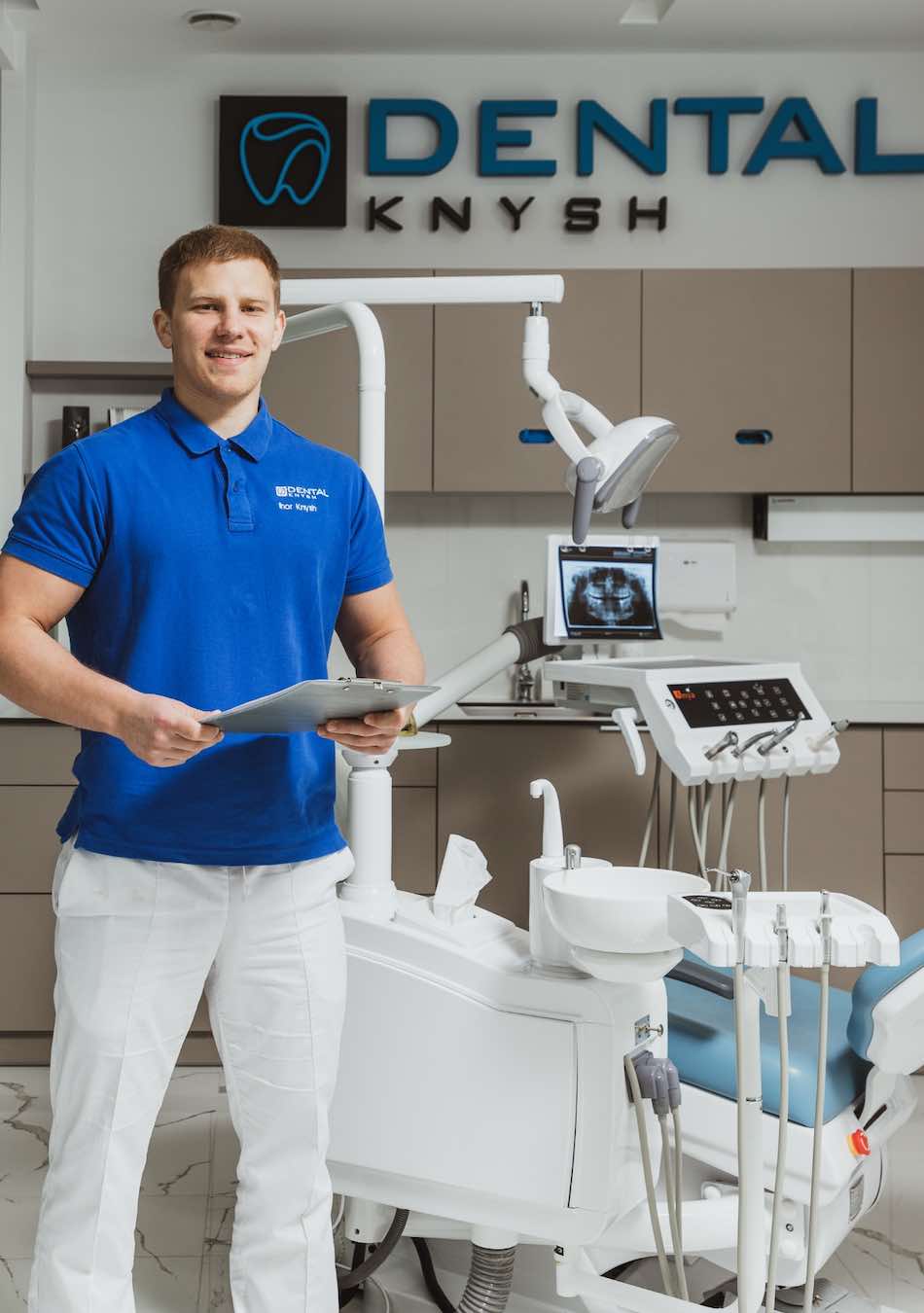
CHIEF DOCTOR, DOCTOR-DENTALIST-SURGEON
Knysh Igor Igorovich
Specialization: surgeon, orthopedist, implantologist.
Education: D. Halytsky
Languages: Ukrainian, Russian, English, German
Rating: ♥️♥️♥️♥️♥️ 9.8 out of 10
Ihor Igorovich has been working as a dentist since 2011. He has experience in treatment, prosthetics and dental implantation. A dental surgeon of the highest category with over 10 years of experience.

DOCTOR-DENTALIST-ORTHOPAEDIST
Knysh Igor Vitaliyovych
Specialization: orthopedist.
Education: LNMU D. Halytsky
Languages: Ukrainian, Russian
Rating: ♥️♥️♥️♥️♥️ 9.9 out of 10
Igor Vitaliyovych has been working as a dentist since 1989. Has experience in treatment, prosthetics and dental implantation. A dentist-orthopedist of the highest category with over 30 years of experience.

DOCTOR-DENTALIST-SURGEON, ORTHOPAEDIST
Borusevich Lyubomyr Vitaliyovych
Specialization: surgeon, orthopedist
Education: D. Halytskyi LNMU Danylo Halytsky
Languages: Ukrainian
Rating: ♥️♥️♥️♥️♥️ 9.7 out of 10
Lyubomyr Vitaliyovych has been working as a dentist and surgeon since 2016. He has experience in treatment, restoration, removal and implantation of teeth. Dentist with over 5 years of experience.
FAQ
Do teeth get damaged under veneers?
No, if the procedure is done correctly. The tooth is protected, but proper hygiene and regular check-ups are essential.
Do teeth need to be shaved?
Usually 0.3–0.7 mm of enamel is removed. In some cases, no-prep veneers are possible.
Is the procedure painful?
No, it is performed under local anesthesia. Sedation can be used if needed.
How many veneers are needed?
Both single and multiple options are possible. Commonly 6–10 veneers are placed in the smile zone.
Can veneers be removed?
No. The procedure is irreversible. Veneers can only be replaced.
Do veneers change color over time?
No, ceramic does not stain. Only natural teeth may change color.
What if a veneer breaks or falls off?
See a dentist. It can usually be re-bonded or replaced.
Can you eat normally with veneers?
Yes, but very hard objects should be avoided.
Are veneers suitable for everyone?
No. There are contraindications such as severe bite issues or bruxism.
Can veneers be combined with other treatments?
Yes, often combined with whitening, orthodontics, or implants.
Leave an application right now, fix the prices, if they rise, and you, for example, can only be at the reception in a month, then the prices before the increase will apply to you.
Make an appointment for a consultation or an appointment
The favorable geographical location creates safe conditions for your stay, the clinic is surrounded on all sides by hills
We have a generator, so we carry out all procedures at the scheduled time.
Please fill out the form and click the “Send” button, the administrator or doctor will call you as soon as possible.
We process your personal data in accordance with the GDPR, мore details in the Privacy Policy

МИ НА GOOGLE МАПІ

DentalKnysh
License of the Ministry of Health of Ukraine: Серія АД №064304 від 09.08.2012

Infomation
Accepted payment methods:
Visa • Mastercard • LiqPay

Contacts
24 Vasyl Stus Street,
Lviv, Ukraine
We speak English
Phone / Viber / WhatsApp:
+38 063 67 98 196
Mon-Fri 09:00 – 20:00
Sut 10:00 – 15:00
© DentalKnysh Dental clinic