
Updated: 10.07.2026 • Reading time: 10 min

Endodontic treatment makes it possible to save your natural tooth even when the pulp is inflamed or infected. According to the American Association of Endodontists, modern root canal treatment is highly effective, and a treated tooth can function for a lifetime with proper care.
With accurate diagnosis and thorough canal cleaning, the success rate of modern endodontic treatment is 85-95%. Treatment is usually completed in 1-2 visits, depending on the complexity of the case (number of canals, presence of inflammation at the root tip, canal curvature). A single visit typically lasts 45-90 minutes.
Using optical magnification (a microscope) increases the precision of root canal treatment and reduces the risk of missing a canal, especially in molars, which may have 3-4 canals or more. After quality endodontic treatment and proper restoration of the crown, a tooth can function for decades.
The cost of treatment is determined individually and depends on the number of canals, the tooth’s anatomical features, and whether further restoration of the crown is needed.
Contents
- What endodontic treatment (root canal therapy) is
- When it’s needed: deep caries, pulpitis, periodontitis, tooth trauma
- Symptoms that call for a dentist visit
- Stages of endodontic treatment
- Modern technology used (microscope, apex locator, digital radiography)
- Benefits of saving your natural tooth
- Aftercare recommendations
- Risks and complications
- Contraindications
- Alternatives
- Most common patient fears
- Frequently asked questions
- Cost (how the estimate is formed)
- Prices
- Doctors
- Results of endodontic treatment DentalKnysh
- Reviews
What is endodontic treatment
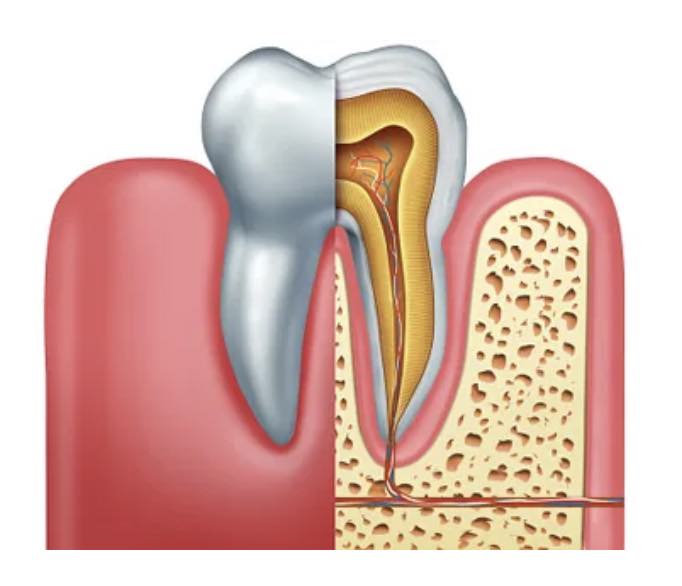
Endodontic treatment (root canal therapy) is a procedure aimed at eliminating infection inside a tooth and preserving its root. The dentist removes the affected pulp, thoroughly cleans and disinfects the root canals, and then seals them tightly. The final step is restoring the tooth with a filling or crown. The goal of treatment is to eliminate pain and infection while keeping the tooth functional for many years.
When root canal treatment is needed
Indications for root canal treatment include:
- Deep caries – when decay progresses deep enough to reach the tooth’s pulp, causing infection.
- Pulpitis – inflammation of the pulp, accompanied by sharp or throbbing pain that often intensifies at night and in response to temperature stimuli.
- Periodontitis – inflammation of the tissues around the tooth root that develops as a complication of untreated pulpitis; it may be accompanied by swelling, a fistula, or an abscess.
- Tooth trauma – blows, cracks, or fractures that damage or kill the pulp even without visible decay.
In all these cases, timely endodontic treatment helps save the tooth and prevents more serious complications – from an abscess to tooth loss.
Symptoms that call for a visit to an endodontist
Reasons to see an endodontist may include:
- prolonged or throbbing toothache,
- increased sensitivity to hot or cold,
- pain when biting down,
- tooth discoloration,
- gum swelling or a fistula near the tooth, and
- changes near the root tip found on an X-ray, even without any symptoms.
Stages of endodontic treatment
- Diagnosis. An examination and an X-ray (a targeted image or a panoramic scan) to assess the condition of the root canals, the number of roots, and any inflammation in the tissue around the root tip.
- Anesthesia. Local anesthesia that makes the procedure painless for the patient.
- Tooth isolation. Placing a rubber dam (a latex sheet) that protects the tooth from saliva and bacteria during treatment.
- Opening the pulp chamber and removing the pulp. The dentist gains access to the canals and removes the affected or necrotic tissue.
- Mechanical and chemical cleaning of the canals. Cleaning and widening the canals with special instruments, and rinsing with antiseptic solutions to kill bacteria.
- Filling the canals. Sealing the canals tightly with gutta-percha and sealer to prevent reinfection.
- Follow-up X-ray. Checking the quality of the canal filling along its entire length.
- Restoring the tooth. Placing a permanent filling or, if needed, a crown or post-and-core to protect the weakened tooth from chipping and cracking.
Modern equipment used in root canal treatment

Dental microscope
Using a surgical microscope allows the dentist to see the internal anatomy of the tooth with high magnification and quality lighting.
This is especially important for finding additional root canals (for example, a fourth canal in molars, which is often missed with the naked eye), locating obliterated (narrowed) canals, and detecting cracks in the tooth walls.
The microscope improves precision at every stage – from opening the pulp chamber to the final filling – and significantly reduces the risk of clinical error.
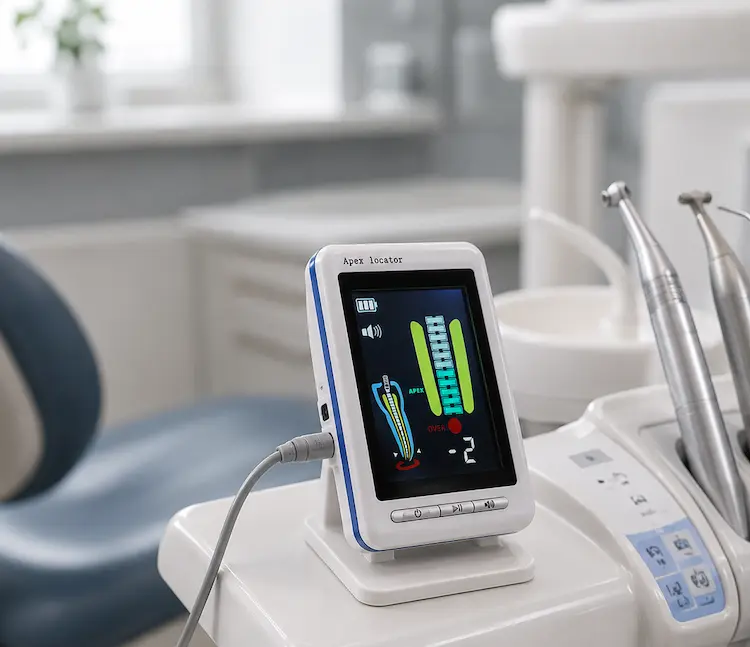
Electronic apex locator
An apex locator is a device that determines the exact length of a root canal by measuring the electrical resistance of the tissues, without the need for multiple check X-rays during canal preparation.
This allows the dentist to stop precisely at the physiological constriction (the apical constriction) without going past the root tip or leaving part of the canal untreated.
The result: less pain after treatment, a lower risk of pushing material past the root tip, and a shorter appointment.

Digital radiography
Digital X-rays (radiovisiography) provide an instant image on screen instead of waiting for film to develop, while reducing the patient’s radiation dose by 70-90% compared to traditional film X-rays.
Images can be enlarged, adjusted for contrast, and stored in the patient’s electronic chart to compare treatment results over time – before, during, and after the procedure.
Together, these three technologies form the standard for quality endodontic treatment: the microscope provides visual control, the apex locator ensures precise canal length, and digital radiography provides safe, clear monitoring at every stage.
Benefits of keeping your natural tooth
Keeping a natural tooth helps maintain proper bite alignment, distribute chewing load evenly, and prevent neighboring teeth from shifting.
A natural tooth provides a natural feel when chewing, doesn’t require surgery, and with quality treatment and proper care can last for decades.
Aftercare recommendations
In the first few days after endodontic treatment, it’s best to avoid excessive strain on the treated tooth, maintain thorough oral hygiene, and follow the dentist’s instructions.
It’s important to restore the tooth with a permanent filling or crown in a timely manner and continue with preventive check-ups at least twice a year.
Risks and possible complications of endodontic treatment
Endodontic treatment is a safe, predictable procedure, but like any medical intervention, it can involve temporary sensitivity or discomfort afterward.
In rare cases, canal reinfection, difficulties related to the individual anatomy of the root system, or the need for retreatment are possible.
Following the dentist’s recommendations and attending regular check-ups helps minimize these risks and ensures a lasting result.
Alternatives to endodontic treatment
If saving the tooth isn’t possible, or endodontic treatment isn’t indicated, an alternative is extraction followed by restoration with an implant, a bridge, or a removable denture.
However, whenever possible, saving the natural tooth is usually the preferred option.
Contraindications for root canal treatment
When endodontic treatment isn’t advisable
Despite its high effectiveness, saving a tooth through endodontic treatment isn’t always possible. A dentist may recommend extraction instead of root canal treatment in the following cases:
- Significant destruction of the tooth crown. When so little healthy tooth structure remains after removing decayed tissue that the tooth cannot be properly restored even with a crown or post-and-core.
- Vertical root fracture. A crack running through the entire root makes the tooth non-viable, since infection will continually enter through the fracture line.
- Significant root resorption. Pathological breakdown of root tissue (internal or external) that significantly weakens the tooth’s structure.
- Blocked root canals. Severe narrowing (obliteration) or curvature of the canals, when proper mechanical cleaning along the entire length isn’t possible even with a microscope.
- Insufficient bone support. Noticeable tooth mobility due to significant bone loss (advanced periodontal disease), when the tooth won’t be able to function properly even after root canal treatment.
- Recurrent inflammation after quality prior treatment (relapse). When retreatment (re-endodontic therapy) also fails to help, and surgical intervention (root-end resection) isn’t possible or advisable.
- The patient’s overall health. Some systemic conditions may limit the ability to undergo a lengthy dental procedure; the decision is made on an individual basis.
In each specific case, the decision to “treat or extract” is made by the dentist based on a clinical exam, X-ray diagnostics, and an assessment of the tooth’s long-term prognosis.
Most common patient fears before root canal treatment
“It’s going to hurt a lot”
This is the most common fear, often based on outdated beliefs or experiences from many years ago. Modern anesthesia works quickly and effectively, and root canal treatment itself is performed on a numbed tooth – the patient feels only pressure, not pain. Ironically, root canal treatment eliminates the source of pain rather than creating a new one.
“The tooth will have to be removed anyway”
Many patients assume that once it comes to a “root canal,” the tooth is doomed. In reality, it’s the opposite: endodontic treatment is precisely the way to save a tooth and avoid extraction. Modern techniques can save even teeth with complex canal anatomy or long-standing inflammation.
“It’s going to be very expensive”
Cost is a real concern that sometimes leads patients to delay treatment until the problem worsens (and becomes more expensive to fix). It’s worth thinking of root canal treatment as an investment in keeping your natural tooth – in the long run, it’s usually more cost-effective than extraction followed by a prosthesis or implant.
“X-rays are harmful, especially if several are needed”
Patients often worry about radiation exposure, especially if multiple images are needed for monitoring. Digital radiography reduces radiation dose by 70-90% compared to traditional film, making several follow-up X-rays completely safe.
“The tooth will fail again soon after treatment anyway”
This concern often comes from stories of failed treatments in the past. With properly cleaned canals, a tight seal, and timely crown restoration, a tooth can last for decades.
“What if the dentist misses something (a canal, a crack)?”
Fear of human error is understandable. This is exactly what the dental microscope is for – it lets the dentist see the tooth’s anatomy magnified many times over and avoid leaving any part untreated.
“It will take a lot of time and visits”
Fear of a long, exhausting treatment keeps many people from seeing a dentist. In reality, most cases are resolved in 1-2 visits of 45-90 minutes each.
Frequently asked questions about root canal treatment
Is root canal treatment painful?
No, the procedure itself is performed under local anesthesia and is painless. Mild discomfort or tooth sensitivity after the anesthesia wears off is normal and usually resolves within 1-3 days.
Is a crown required after root canal treatment?
Not always – it depends on how much tooth structure remains. If enough healthy walls are left, a quality filling may be sufficient. However, for back teeth (molars and premolars) with significant tissue loss, a crown or post-and-core buildup is recommended, as it protects the weakened tooth from chipping and cracking.
What should I do if my tooth turned dark after root canal treatment?
Tooth discoloration can occur if the pulp had already died before treatment, or if certain materials were used to fill the canals. In such cases, internal tooth whitening or a veneer/crown can help.
Can a tooth get infected again after root canal treatment?
In rare cases, reinfection can occur due to an incomplete seal, a crack in the root, or a missed additional canal. This is resolved with retreatment or, if necessary, surgical intervention.
Why does a tooth hurt after root canal treatment?
Mild pain when biting down, or sensitivity for a few days after the procedure, is a normal tissue response to the mechanical treatment. If the pain increases, lasts more than a week, or is accompanied by swelling, you should see your dentist without delay.
How many visits are needed to treat one tooth?
Treatment is usually completed in 1-2 visits. The number of visits depends on the complexity of the canal anatomy and whether there is acute inflammation or a pus-filled focus that needs time to heal between appointments.
How long does a tooth last after root canal treatment?
With quality treatment and timely restoration of the crown portion (filling or crown), a tooth can function for decades, almost like a natural, living tooth.
Can root canals be treated during pregnancy?
Yes, endodontic treatment can be performed at any stage of pregnancy when urgently needed (severe pain, inflammation), since local anesthesia and digital X-rays with a protective apron are safe. The optimal period is the second trimester.
Cost of root canal treatment
The cost of endodontic treatment is a purely individual matter made up of several components. The dentist can give you an exact figure only after examining the specific tooth and taking an X-ray.
What the price depends on:
- Number of root canals – treating an incisor or canine (1 canal) costs less than treating a molar, which may have 3-4 canals or more.
- Complexity of the canal anatomy – curved, narrowed (obliterated) canals or additional branches require more time and instruments.
- Initial treatment vs. retreatment – removing an old filling material from a previously treated tooth is a more complex, and therefore more expensive, process than treating a tooth “from scratch.”
- Inflammation at the root (cysts, granulomas) – may require additional medicated canal treatment or extra visits, which affects the cost.
- Equipment and materials used – the use of a microscope, an apex locator, and quality filling materials (gutta-percha with sealer) is factored into the cost of quality treatment.
- Restoring the tooth after treatment – a filling, post-and-core, or crown is billed separately from the endodontic treatment itself and significantly affects the total cost.
It’s important to understand: saving money on root canal treatment (choosing the cheapest option without proper diagnostics and modern equipment) often leads to reinfection and the need for retreatment – which means paying twice. Quality treatment done right the first time is an investment that pays off in how long your natural tooth lasts.
You’ll learn the exact cost of treating your specific tooth at a consultation, after an examination and X-ray.
Root canal treatment vs. extraction with subsequent restoration
This comparison helps see the full cost picture, not just the price of a single step.
| Root canal treatment + restoration | Extraction + implant | |
| Approximate cost | from $67 (anesthesia + treatment) + from $52 (filling) | from $45 (extraction) + from $285 (implant) + from $160 (crown on implant) |
| Number of visits | 1–2 visits for treatment + visits for restoration | extraction → bone healing period (2-6 months) → implant placement → another healing period → crown |
| Total timeline | usually 2–4 weeks to full restoration | 4 to 9+ months |
| Your natural tooth | preserved | completely lost |
| Extra procedures | usually not needed | bone grafting (sinus lift, etc.) sometimes needed, adding to both cost and timeline |
Bottom line: root canal treatment is usually cheaper and faster than extraction followed by implantation, and most importantly, it lets you keep your natural tooth, which is always more functional than any artificial replacement.
The final treatment approach is decided individually after an examination by the dentist.
Author – Dmytro Kushinsky, endodontist at DentalKnysh Dental Clinic
Treatment of root canals of teeth with microscope in DentalKnysh dentistry


Modern technologies and materials

Affordable prices

We have been treating since 1989
Modern endodontic treatment methods, advanced equipment, and specialized instruments used at DentalKnysh dental clinic, combined with our dentists’ expertise, allow us to treat pulp disease (the loose fibrous connective tissue inside the tooth) as effectively as possible.
At DentalKnysh dental clinic, canals are filled using calcium-based AH Plus Dentsply filling materials (Germany) and gutta-percha points.
The quality of root canal treatment determines the future not only of the tooth itself but also of the surrounding bone tissue, which is why we aim for a long-term result. We look forward to seeing you for a consultation at DentalKnysh dental clinic.
Prices
To avoid errors in our price lists and keep prices accurate, we’ve gathered all pricing information on a single page, separately for each language. Thank you for understanding ♥️
You can view prices for root canal treatment and tooth restoration afterward in the Restorative Dentistry section (filling cost), Prosthodontics section (crown cost, if needed), and Endodontic Treatment Under a Microscope section, on the DentalKnysh Dental Services Price List page.
DentalKnysh endodontists

DOCTOR-DENTALIST-ENDODONTIST
Dmytro Rostyslavovich Kushinsky
Specialization: endodontist, therapist.
Education: LNMU D.Halytsky
Languages: Ukrainian, English.
Rating: ♥️♥️♥️♥️♥️ 9.7 out of 10
Dmytro has been working as a dentist and endodontist since 2016. He has experience in treating teeth and root canals. Dentist with over 5 years of experience.
DOCTOR-DENTALIST-ENDODONTIST
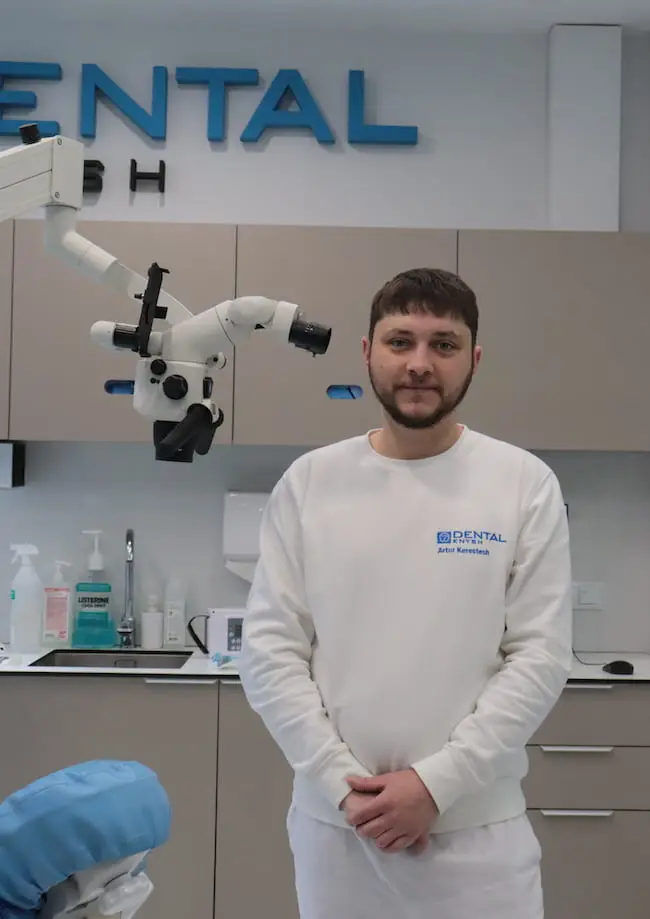
Arthur Kerestesh
Specialization: therapist, endodontist
Education: LNMU D.Halytsky
Languages: Ukrainian, English.
Rating: ♥️♥️♥️♥️♥️ 9.7 out of 10
Aptur has been working as a dentist-endodontist since 2011. He has experience in treating teeth and root canals. Dentist with over 10 years of experience.
Results of endodontic treatment DentalKnysh


More photos of the reports can be found on the endodontist’s page.
Reviews


You can find more reviews of our dentists’ work on our separate Reviews page.


Leave an application right now, fix the prices, if they rise, and you, for example, can only be at the reception in a month, then the prices before the increase will apply to you.
Make an appointment for a consultation or an appointment
The favorable geographical location creates safe conditions for your stay, the clinic is surrounded on all sides by hills
We have a generator, so we carry out all procedures at the scheduled time.
Please fill out the form and click the “Send” button, the administrator or doctor will call you as soon as possible.
We process your personal data in accordance with the GDPR, мore details in the Privacy Policy

МИ НА GOOGLE МАПІ

DentalKnysh
License of the Ministry of Health of Ukraine: Серія АД №064304 від 09.08.2012

Infomation
Accepted payment methods:
Visa • Mastercard • LiqPay

Contacts
24 Vasyl Stus Street,
Lviv, Ukraine
We speak English
Phone / Viber / WhatsApp:
+38 063 67 98 196
Mon-Fri 09:00 – 20:00
Sut 10:00 – 15:00
© DentalKnysh Dental clinic