
Home > Orthodontic dentistry > Eligners
Updated: August 30, 2026 • Reading time: 16 minutes
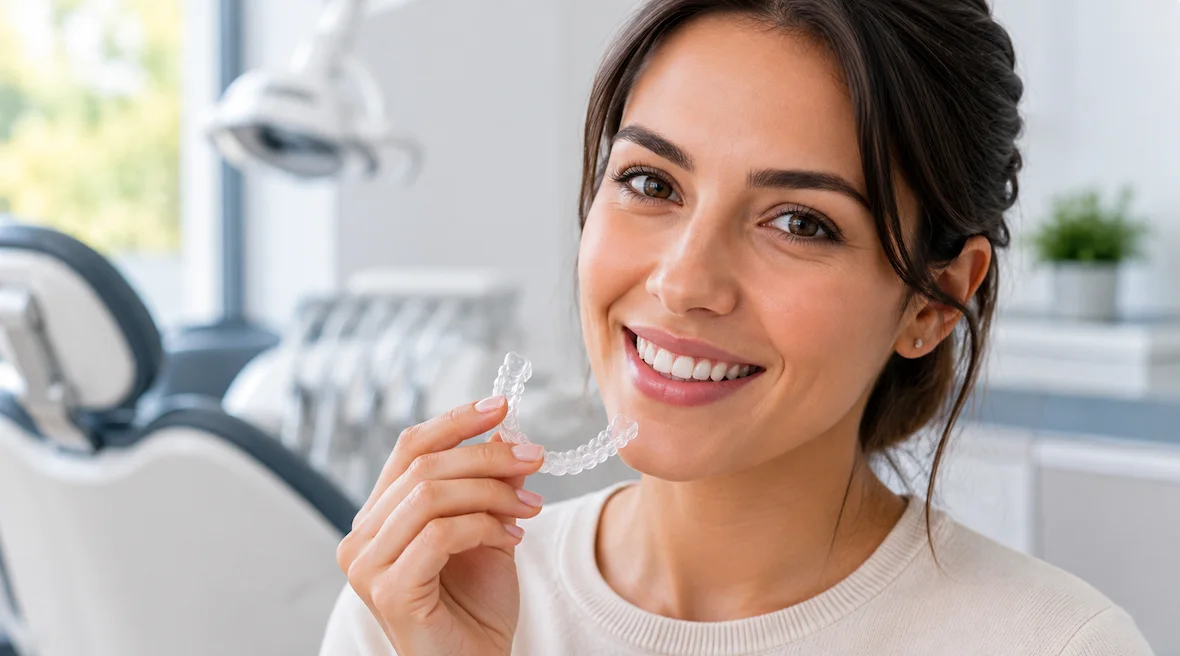
Clear aligners are effective only when worn consistently. The American Association of Orthodontists recommends wearing them for 22 hours a day, removing them only for eating and oral hygiene. Each set of aligners is typically worn for 1-2 weeks before moving on to the next set, gradually shifting the teeth according to the treatment plan.
At the beginning of treatment, it is reasonable to allow about one week for adjustment. Some pressure and discomfort may occur and usually decrease gradually. The frequency of orthodontic check-ups depends on the individual case and treatment plan; the interval between appointments may be 6-10 weeks.
Contents
What are clear aligners
Who are clear aligners suitable for
What bite problems can clear aligners correct
What age can you start wearing clear aligners
Clear aligners or braces – which should you choose
Diagnosis and treatment planning
How clear aligner treatment works
How many hours a day should you wear aligners
How long does clear aligner treatment take
Do clear aligners hurt and how long does adjustment take
Eating and drinking with clear aligners
How to care for aligners and your teeth
How often do you need orthodontic check-ups
Attachments, IPR and other treatment elements
What to do if an aligner breaks or gets lost
Retention after clear aligner treatment
When clear aligners may not be suitable
Risks and possible complications
Clear aligners for adults and teenagers
Treatment results
DentalKnysh orthodontist
Clear aligner FAQ
Clear aligner cost in Lviv
What are clear aligners
Clear aligners are transparent, removable orthodontic trays used to gradually move teeth and correct bite problems. Unlike braces, they are not permanently attached to the teeth: patients can remove them for eating and oral hygiene.
Treatment involves a series of custom-made aligners. Each new aligner has a slightly different shape and applies controlled pressure to specific teeth, gradually moving them towards their planned positions.
Before treatment begins, the orthodontist performs a diagnostic assessment and digital treatment planning. This makes it possible to determine the sequence of tooth movements and preview the expected treatment outcome.
Who are clear aligners suitable for
Clear aligners can be used to treat many orthodontic problems in adults and teenagers. They are best suited to patients who are prepared to follow the prescribed wear schedule and use their aligners consistently according to the orthodontist’s treatment plan.
Clear aligner treatment may be a suitable option for patients who want to:
- straighten their teeth without a noticeable fixed appliance;
- remove the orthodontic appliance while eating;
- maintain oral hygiene more easily;
- continue their usual lifestyle with minimal visible changes.
However, suitability for clear aligner treatment is not determined by patient preference alone. The orthodontist assesses tooth position, the type of bite problem, periodontal health, the required tooth movements and other clinical factors.
What bite problems can clear aligners correct
Modern clear aligners can be used for more than minor tooth misalignment. Depending on the individual case and the aligner system used, they may be suitable for:
- crowded teeth and insufficient space;
- gaps between teeth;
- incorrect positioning or rotation of individual teeth;
- deep bite;
- open bite;
- crossbite;
- some cases of Class II and Class III malocclusion.
Clear aligners do have limitations. In cases involving complex skeletal problems, significant tooth movements or movements requiring particularly precise control of the tooth roots, the orthodontist may recommend braces, combined treatment or another approach.
For this reason, the question “Can my bite be corrected with clear aligners?” can only be answered after a full orthodontic assessment.
What age can you start wearing clear aligners
Clear aligners can be used for both adults and teenagers. A patient’s chronological age is less important than the condition of the teeth and jaws, the stage of permanent dentition development, and their ability to follow the prescribed wear schedule.
For teenagers, clear aligner treatment may be possible after the orthodontist evaluates the eruption of permanent teeth and jaw development. Special orthodontic protocols are available for younger patients, but the decision is made by the orthodontist after a diagnostic assessment.
For adults, there is effectively no upper age limit. If the teeth and periodontal tissues are healthy enough to allow orthodontic tooth movement, treatment can also be started later in life.
Clear aligners or braces – which should you choose
Clear aligners and braces have the same goal – moving the teeth into their planned positions – but they achieve it in different ways. The choice depends on the complexity of the orthodontic case, the patient’s lifestyle, and their ability to follow treatment recommendations.
Clear aligners are almost invisible and can be removed for eating and brushing. This makes oral hygiene easier and avoids the restrictions on hard foods associated with braces. At the same time, treatment success depends greatly on patient compliance: aligners need to be worn for approximately 22 hours a day.
Braces remain fixed to the teeth, so treatment does not depend on whether the patient remembers to put the appliance back on. They may also offer advantages for certain complex tooth movements.
There is therefore no universally “better” option. After diagnosis, the orthodontist can determine whether both methods are equally effective for a particular case and the patient can choose between them, or whether one method offers specific clinical advantages.
Diagnosis and treatment planning
Clear aligner treatment does not begin with making the trays, but with a complete orthodontic assessment. The orthodontist evaluates the position of the teeth and jaws, the bite, and the condition of the teeth and periodontal tissues.
Depending on the clinical situation, diagnostics may include:
- an orthodontic examination;
- digital scanning of the dental arches;
- photographs of the face and teeth;
- a panoramic X-ray;
- a cephalometric X-ray and other necessary examinations.
Based on these findings, a digital treatment plan is created. The orthodontist determines which teeth need to be moved and in what sequence, and whether attachments, interproximal reduction (IPR), or other orthodontic elements will be required.
The digital model makes it possible to preview the planned sequence of tooth movements before treatment begins. It is a treatment prediction, not a guarantee that biological tooth movement will occur exactly as shown in the computer simulation.
How clear aligner treatment works
Once the digital treatment plan has been approved, a custom series of aligners is produced. The patient receives the aligners and wears them in the sequence prescribed by the orthodontist.
Treatment usually involves several stages:
- Diagnosis and digital planning. The orthodontist evaluates the initial position of the teeth and plans their movement.
- Aligner production. A custom series of aligners is created based on the digital model.
- Starting treatment. If necessary, attachments are placed on the teeth and other planned procedures are performed.
- Sequential aligner changes. Each set is worn for the prescribed period before moving on to the next one.
- Orthodontic check-ups. The orthodontist checks whether the actual tooth movement corresponds to the treatment plan.
- Adjustments if necessary. If some teeth do not move as predicted, an additional scan and a series of refinement aligners may be required.
- Retention. Once the desired result has been achieved, retainers are used to keep the teeth in their new positions.
How many hours a day should you wear aligners
Clear aligners should be worn for approximately 22 hours a day. They are mainly removed for eating, drinking anything other than water, and oral hygiene.
Consistent wear directly affects treatment. If aligners are frequently left out or removed for long periods, the teeth may move more slowly and the next aligner may not fit properly.
Each set is usually worn for 1–2 weeks, but the exact replacement schedule is determined by the orthodontist. Patients should not switch to the next aligner earlier than recommended.
How long does clear aligner treatment take
The duration of clear aligner treatment depends on the initial position of the teeth, the complexity of the bite problem, the amount of tooth movement required, and compliance with the prescribed wear schedule.
In simpler cases, treatment may take several months. More complex cases may require one or two years, or longer. A more accurate estimated treatment time can only be provided after diagnostic assessment and digital treatment planning.
It is also important to understand that the initial plan may need to be adjusted. If the teeth do not move fully according to the prediction, a new scan may be taken and an additional series of aligners produced. This can increase the overall treatment time.
Do clear aligners hurt and how long does adjustment take
Clear aligner treatment usually causes pressure rather than sharp pain. This sensation may be most noticeable after wearing the first aligner and when switching to a new set, as each new aligner begins another stage of tooth movement.
During the first few days, patients may also notice an unfamiliar feeling of having something in their mouth, increased saliva production, or minor changes in speech. For most patients, these effects gradually decrease during the first few days.
If an aligner irritates the soft tissues, does not fit the teeth properly, or causes severe or persistent pain, the patient should contact the orthodontist rather than attempting to modify the aligner themselves.
Eating and drinking with clear aligners
Aligners should be removed before eating. This means that most of the restrictions on hard or sticky foods associated with braces do not apply during clear aligner treatment.
Plain water can be consumed while wearing aligners. Aligners should preferably be removed before drinking hot, sugary, or coloured beverages: high temperatures may affect the material, while some drinks can contribute to plaque build-up or discolouration of the aligners.
After eating, it is best to brush your teeth before putting the aligners back in. If this is not possible, rinse your mouth thoroughly with water and perform proper oral hygiene as soon as possible.
How to care for aligners and your teeth
One advantage of clear aligners is that the teeth can be cleaned thoroughly without an orthodontic appliance attached to their surfaces. The aligners are removed, the teeth are brushed with fluoride toothpaste, and the spaces between the teeth are cleaned with dental floss or other products recommended by the dentist.
The aligners themselves also need regular cleaning. For daily care, use cool or lukewarm water and products recommended for cleaning aligners. Hot water should not be used because the thermoplastic material may become distorted.
When the aligners are removed, they should be kept in their protective case. Avoid wrapping them in a tissue or leaving them without a case, as they can easily be accidentally thrown away, damaged, or lost.
How often do you need orthodontic check-ups
During clear aligner treatment, there is no need to visit the orthodontist after every aligner change. Patients switch to the next set themselves according to the prescribed schedule, while orthodontic check-ups are carried out periodically.
The interval between appointments depends on the clinical case and stage of treatment and may be approximately 6-10 weeks. During these visits, the orthodontist checks whether the actual tooth movement corresponds to the digital treatment plan, assesses how well the aligners fit, and checks the condition of the attachments.
The schedule may be adjusted when necessary. If an aligner stops fitting properly, an attachment comes off, or another problem occurs, the patient should contact the orthodontist rather than waiting for the next scheduled appointment.
Attachments, IPR and other treatment elements
Clear aligners do not always work on their own. To provide more precise control of tooth movement, the orthodontist may use attachments — small composite shapes bonded to the surfaces of certain teeth. The aligner engages with these attachments to apply the required force in the planned direction.
In some cases, interproximal reduction (IPR) may be required. This involves a minimal, controlled reduction of the contact areas between selected teeth to create a small amount of additional space needed for alignment. The amount of IPR is determined during treatment planning.
Elastics and other auxiliary orthodontic elements may also be used. Whether they are required depends on the bite and the planned tooth movements.
What to do if an aligner breaks or gets lost
If an aligner is lost, cracked, or distorted, do not switch to the next set on your own. Contact your orthodontist and provide the number of the aligner and how many days it has already been worn.
Depending on the situation, the orthodontist may recommend temporarily wearing the previous aligner, moving on to the next one, or ordering a replacement for the damaged aligner. The decision depends on the stage of treatment and how far the teeth have already moved.
It is best not to discard previous sets immediately after changing aligners, as they may be useful in situations like this.
Retention after clear aligner treatment
After treatment, the teeth need to be maintained in their new positions. Without retention, they have a tendency to partially move back towards their previous positions. This is known as orthodontic relapse.
Retainers are used to stabilise the result. These may include clear removable retainers, a fixed retainer bonded to the inside surfaces of the teeth, or a combination of both.
The orthodontist determines how and for how long retainers should be worn. Retention is not a secondary stage of treatment but an essential part of orthodontic care that helps maintain the achieved result.
When clear aligners may not be suitable
Clear aligners can treat a wide range of orthodontic problems, but they are not suitable for every case. For complex bite problems or tooth movements that require particularly precise control of tooth and root position, braces may provide a more predictable treatment option.
Clear aligners may also be a poor choice if the patient is not prepared to wear them for approximately 22 hours a day. Because the aligners are removable, treatment success depends greatly on following the prescribed wear schedule.
Before orthodontic treatment begins, active dental problems should be treated and the health of the gums and supporting tissues should be assessed. Whether clear aligners are suitable for a particular case can only be determined after a full orthodontic assessment.
Risks and possible complications
Clear aligners, like any orthodontic treatment, have certain risks and limitations. Some of these are related not to the aligners themselves but to the process of moving teeth.
Possible issues during treatment include:
- temporary pressure and discomfort after changing aligners;
- irritation of the soft tissues from the edges of the aligners;
- inadequate fit of an aligner around individual teeth;
- tooth decay or gum inflammation if oral hygiene is inadequate;
- unwanted or incomplete tooth movements;
- changes affecting the tooth roots and periodontal tissues associated with orthodontic treatment;
- the need for an additional series of refinement aligners;
- partial movement of the teeth back towards their previous positions without proper retention.
Regular orthodontic check-ups allow the orthodontist to monitor treatment and adjust the plan when necessary if the actual tooth movement differs from what was planned.
Clear aligners for adults and teenagers
The principle of clear aligner treatment is the same for adults and teenagers: the teeth are gradually moved using a sequence of transparent aligners. However, treatment planning takes into account the patient’s age, the condition of the teeth and jaws, and individual clinical factors.
For adults, important considerations may include periodontal health, existing crowns or implants, missing teeth, and previous dental treatment. Age itself is not a barrier to orthodontic treatment.
For teenagers, the orthodontist also considers jaw growth and the eruption of permanent teeth. Compliance is particularly important: clear aligners only work when they are actually worn for the required number of hours.
Clear aligner FAQ
Are clear aligners visible on the teeth?
Clear aligners are transparent and significantly less noticeable than traditional braces. However, they are not completely invisible: the edges of the aligners and attachments on the teeth may be noticeable at close range.
Can I remove my aligners during the day?
Yes. Aligners are removed for eating, most drinks, and oral hygiene. The recommended total wear time is approximately 22 hours a day.
Can I sleep with clear aligners?
Yes. Aligners should remain on the teeth while you sleep — nighttime wear is included in the recommended daily wear time.
Can I drink coffee or tea while wearing aligners?
It is better to remove them. Hot drinks may affect the aligner material, while coffee, tea, and other coloured beverages may stain the aligners and reduce their transparency.
Can I smoke while wearing aligners?
It is not recommended. Tobacco and combustion products may discolour the aligners, and smoking negatively affects oral health.
Do clear aligners affect speech?
Minor changes in speech may occur during the first few days. They usually become much less noticeable or disappear once the tongue adapts to the aligners.
What are attachments, and are they visible?
Attachments are small composite shapes bonded to selected teeth to provide more precise tooth movement. They are matched to the colour of the teeth but may still be noticeable at close range.
Do I need to treat tooth decay before getting clear aligners?
Active dental problems should be treated before orthodontic treatment begins. The condition of the teeth and gums is assessed during treatment preparation.
What happens if I wear my aligners for less than 22 hours a day?
The teeth may not have enough time to move into their planned positions. As a result, subsequent aligners may not fit properly, and treatment may require adjustment or take longer.
Can my teeth move again after treatment?
Yes. There is a risk of relapse after any orthodontic treatment, which is why retention is necessary after clear aligner treatment.
Can clear aligners correct a complex bite problem?
Some complex cases can be treated with clear aligners, sometimes with additional orthodontic elements. However, aligners are not the optimal treatment for every clinical situation. The orthodontist determines this after a diagnostic assessment.
How much do clear aligners cost in Lviv?
The cost depends on the complexity of the case, the duration of treatment, and the number of aligners required. An exact treatment plan and cost can be determined after an orthodontic assessment.
Clear aligner cost in Lviv
The cost of clear aligner treatment depends on the complexity of the orthodontic case, the planned duration of treatment, and the number of aligners required to achieve the planned result.
The orthodontist can determine the exact scope and cost of treatment after a diagnostic assessment and preparation of an individual treatment plan.
Aligner price DentalKnysh is here
Doctor orthodontist DentalKnysh

DOCTOR-DENTALIST-ORTHODONTIST
Bonar Valeria Oleksandrivna
Specialization: orthodontics
Education: LNMU D.Halytsky
Languages: Ukrainian, English.
Rating: ♥️♥️♥️♥️♥️ 9.7 out of 10
Valeria Oleksandrivna has been working as an orthodontist since 2010. She has experience in treatment, teeth alignment and installation of braces and aligners. A dentist of the highest category with over 10 years of experience, a member of the Association of Orthodontists of Ukraine.
Alignment of teeth with eligners in DentalKnysh
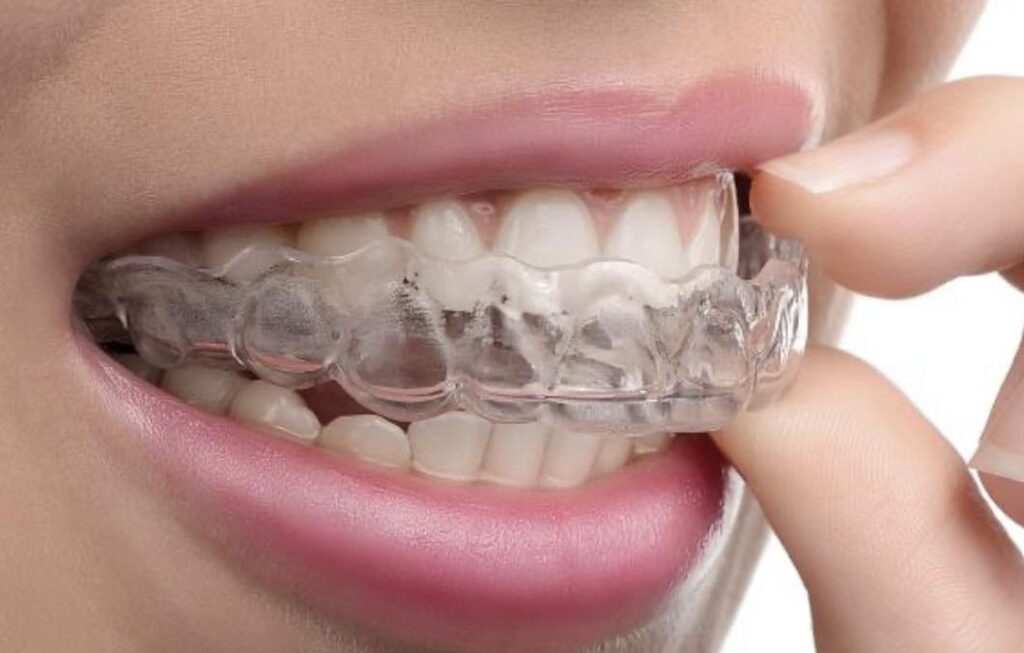

Easy in use

Good oral hygiene

Aesthetic
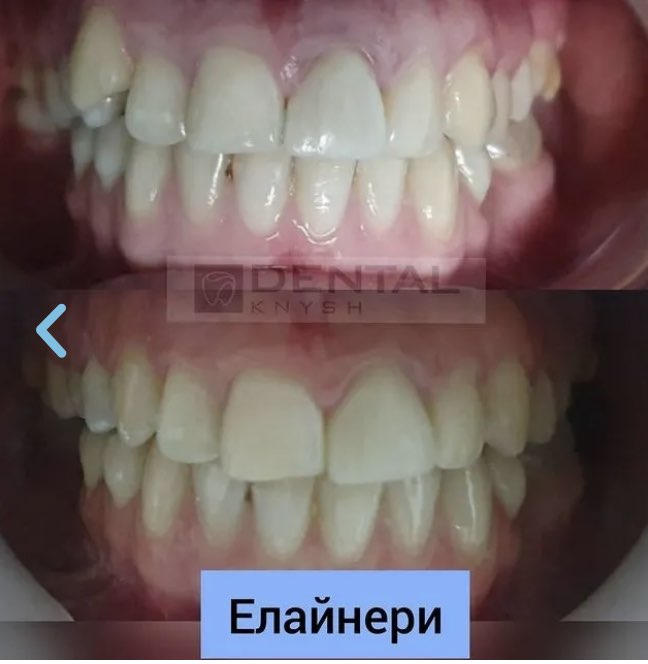
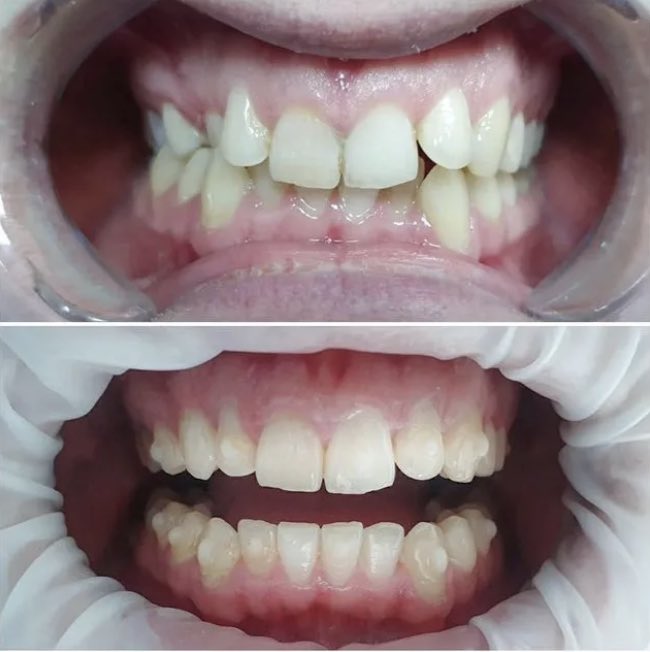
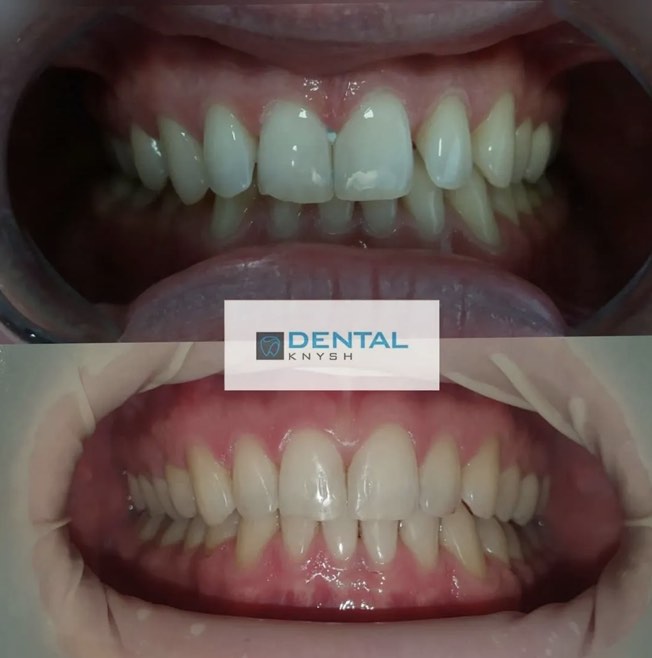
THE RESULT OF TEETH ELIGNATION BY EYELINERS IN OUR PHOTO CLINIC


REVIEWS



Leave an application right now, fix the prices, if they rise, and you, for example, can only be at the reception in a month, then the prices before the increase will apply to you.
Make an appointment for a consultation or an appointment
The favorable geographical location creates safe conditions for your stay, the clinic is surrounded on all sides by hills
We have a generator, so we carry out all procedures at the scheduled time.
Please fill out the form and click the “Send” button, the administrator or doctor will call you as soon as possible.
We process your personal data in accordance with the GDPR, мore details in the Privacy Policy

МИ НА GOOGLE МАПІ

DentalKnysh
License of the Ministry of Health of Ukraine: Серія АД №064304 від 09.08.2012

Infomation
Accepted payment methods:
Visa • Mastercard • LiqPay

Contacts
24 Vasyl Stus Street,
Lviv, Ukraine
We speak English
Phone / Viber / WhatsApp:
+38 063 67 98 196
Mon-Fri 09:00 – 20:00
Sut 10:00 – 15:00
© DentalKnysh Dental clinic